Last updated November 22, 2026
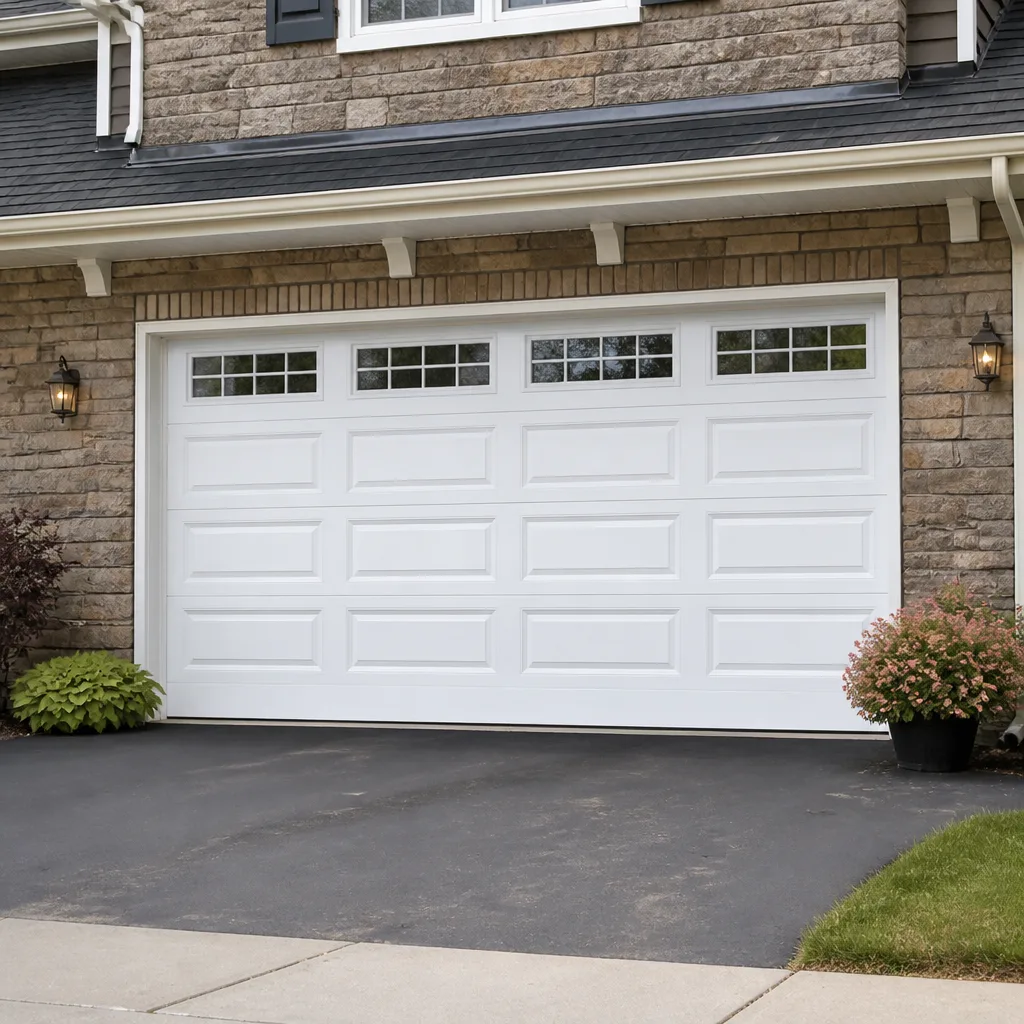 Raised-panel steel
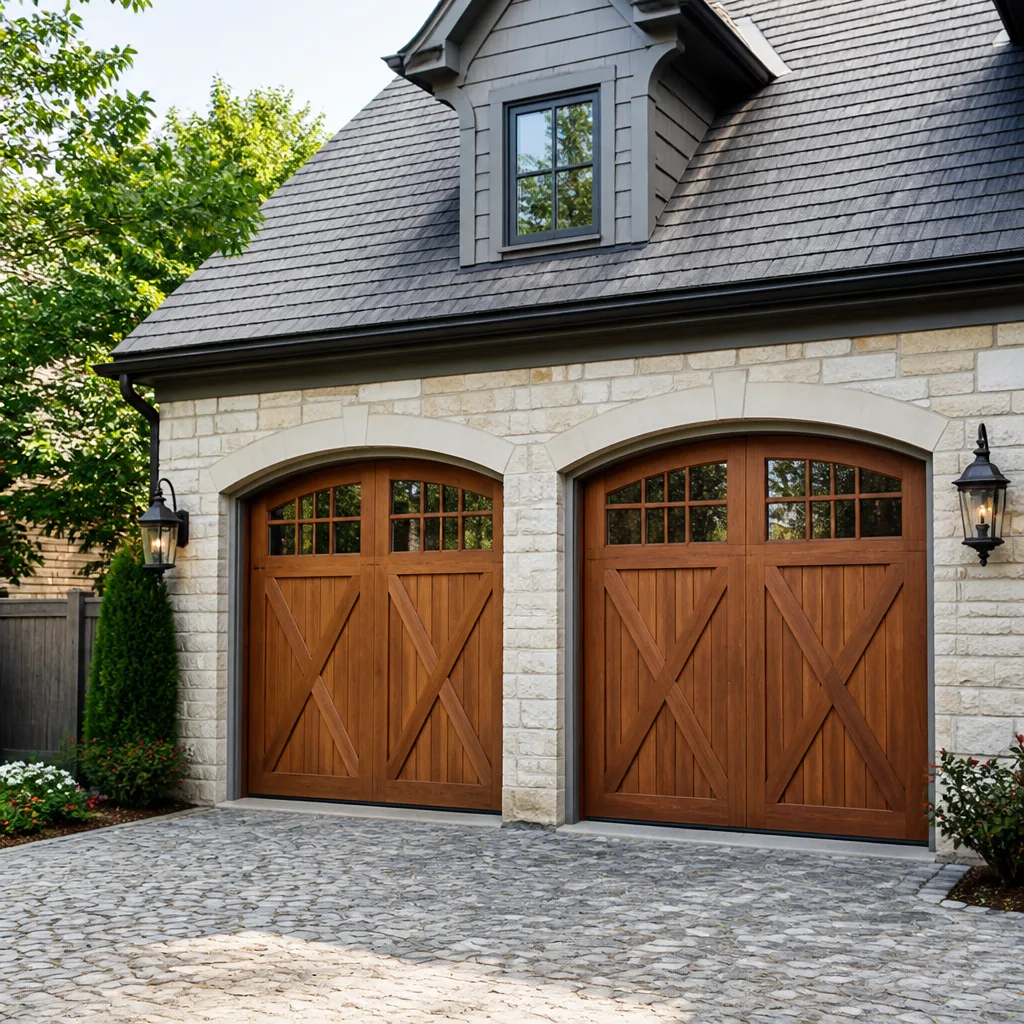 Carriage house
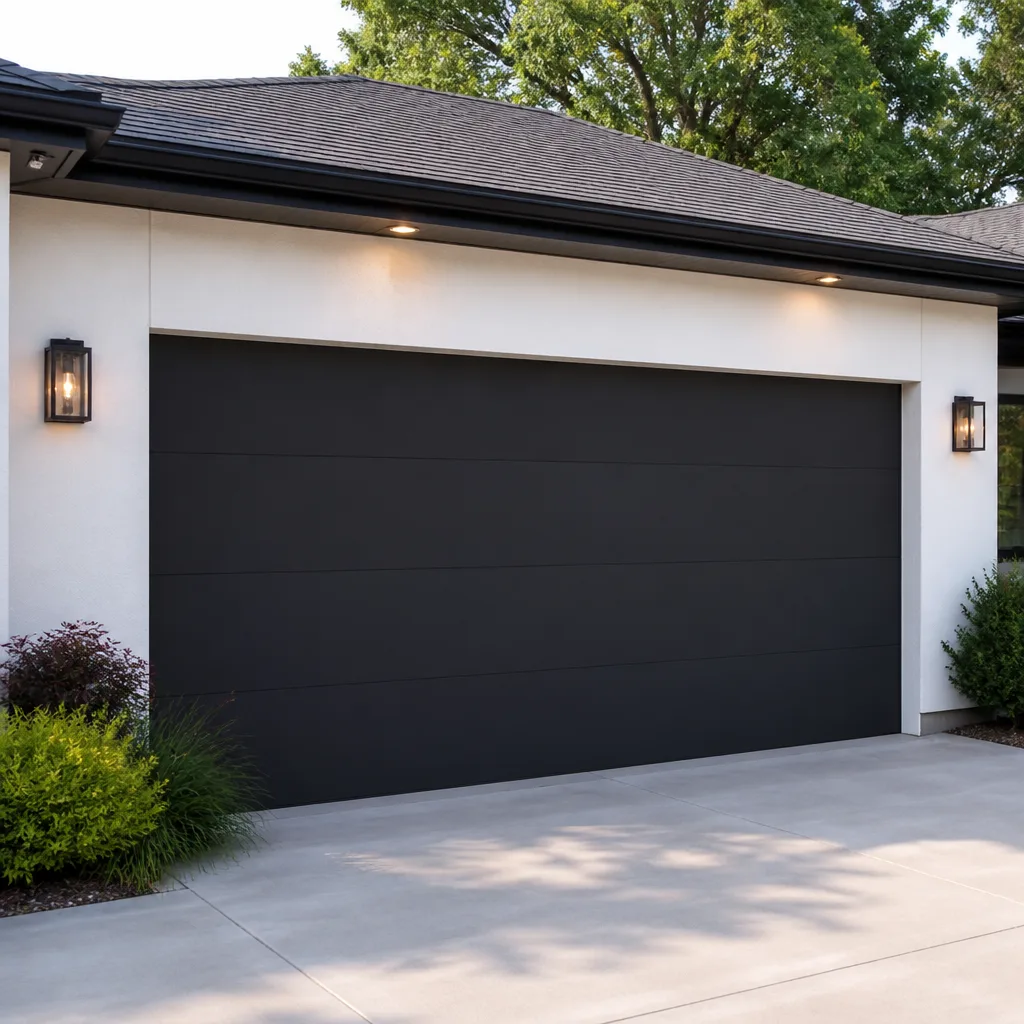 Modern flush
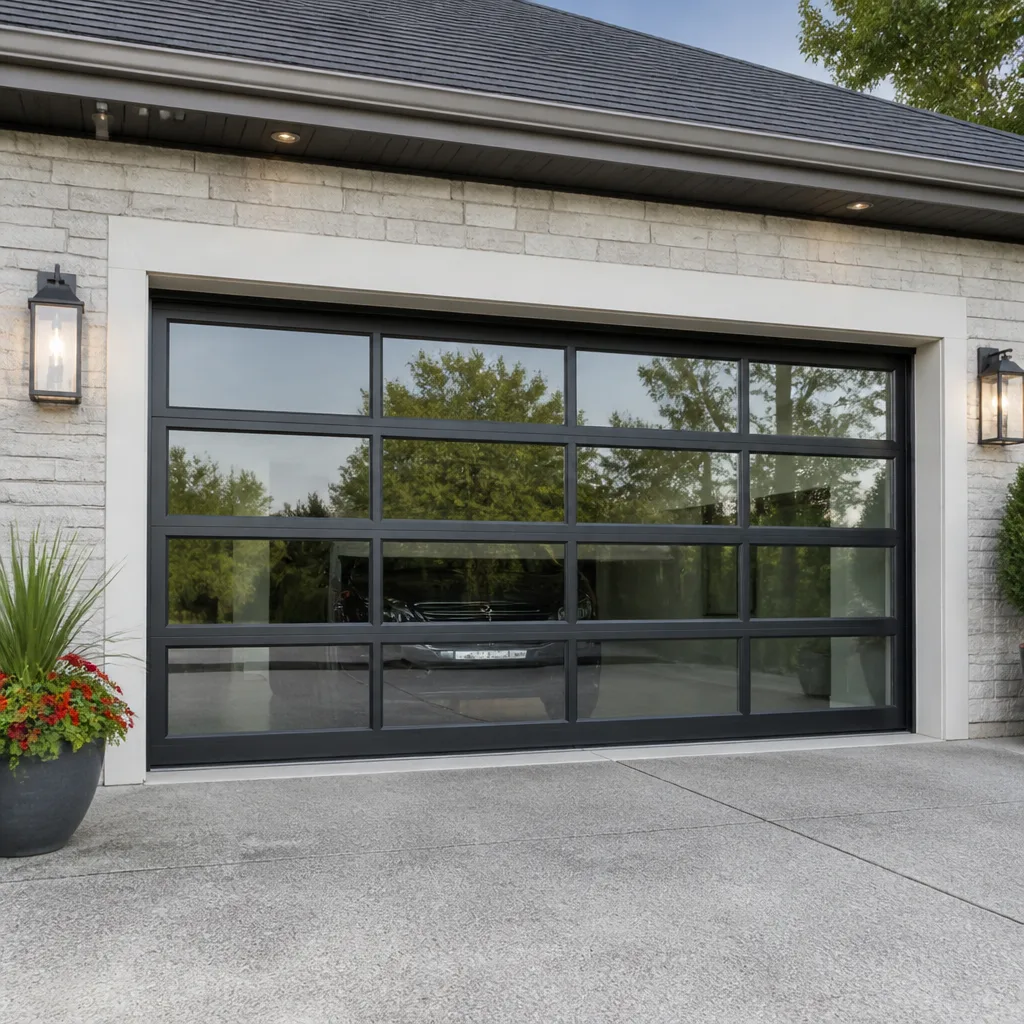 Full-view glass
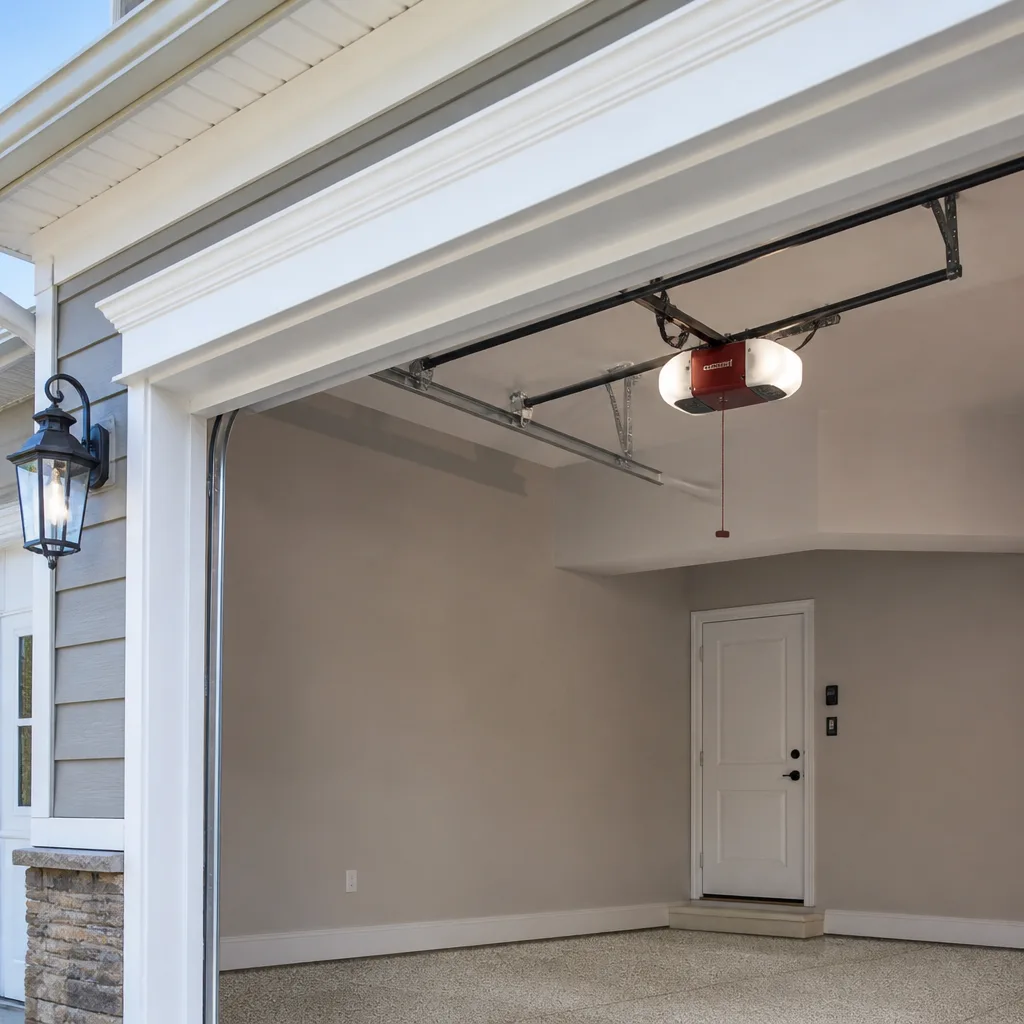 LiftMaster openers
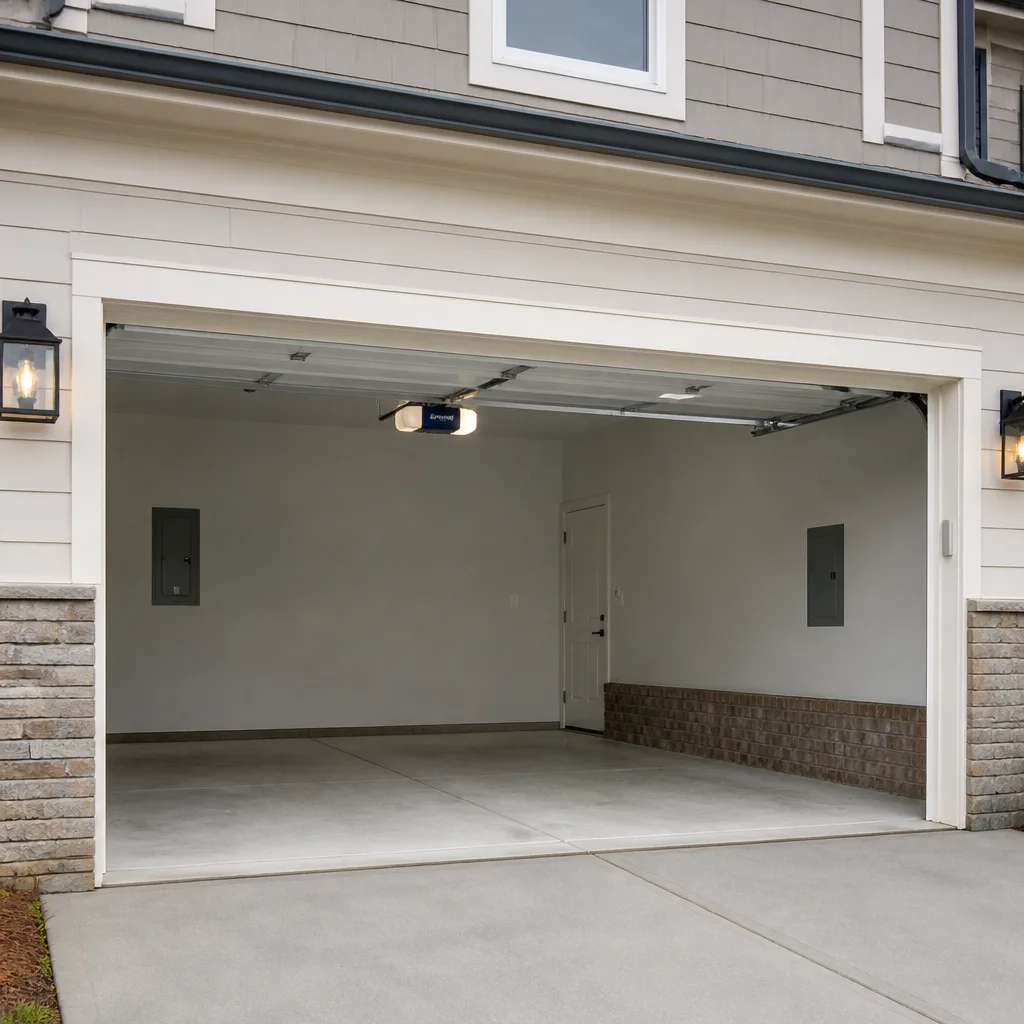 Chamberlain openers
Full 25-point door and opener safety check with every visit - springs, cables, rollers, tracks, and your LiftMaster or Chamberlain opener included
You get a price before we start. It does not change when the pro arrives.
Get your free estimateGarage Door Repair Troubleshooting in Powderhorn: Common Problems and How to Fix Them
If your garage door won’t move and you’ve already replaced the batteries in your remote, you’ve started in the wrong place. Most garage door failures in Powderhorn have nothing to do with the opener at all. The motor gets blamed because it’s the part that makes noise and has a light on it, but the actual problem is usually mechanical: a spring that lost tension, a cable that jumped a drum, or a track knocked out of alignment. The opener just sounds like it’s failing because it’s trying to lift weight it was never meant to carry.
This guide walks through a physical-first, electrical-second way to troubleshoot a problem door. You’ll learn a symptom-to-cause diagnostic tree, what Powderhorn’s freeze-and-thaw cycles do to your hardware, the three repairs you should never touch yourself, and a 60-second balance test that tells you where the real fault lives. Read it before you call anyone, and you’ll know what you’re dealing with.
Quick Answer
Most garage door problems in Powderhorn are mechanical, not electrical, and a simple manual balance test tells you which. Pull the opener release, lift the door halfway by hand: if it won’t stay put or feels extremely heavy, the springs, cables or tracks are the culprit and the opener is fine. Never attempt torsion springs, frayed cables or bent tracks under tension yourself – those require a trained technician.
Styles & brands we work with
- Raised-panel steel
- Carriage house
- Modern flush
- Full-view glass
- LiftMaster openers
- Chamberlain openers
Table of Contents
- Start With the Physical Door, Not the Opener
- The 60-Second Balance Test That Reveals the Real Problem
- What Powderhorn’s Freeze-Thaw Cycles Do to Tracks and Seals
- Symptom-to-Cause: Sorting Mechanical Failures From Opener Issues
- The Three Repairs You Should Never Attempt Yourself
- When a Temporary Workaround Buys Safe Time
- Reading Your Hardware: Openers, Doors and Brand Clues
- When It’s Time to Bring In a Technician
Start With the Physical Door, Not the Opener
The single most common misdiagnosis we see is a homeowner convinced their opener is dead when the door itself is the problem. Before you touch the wall button, the remote, or the app, run this sequence in order:
- Watch and listen. Press the wall button and watch the door. Does the motor hum but the door barely moves? That points to a mechanical load, not a dead motor. Does the door move partway and reverse? That’s usually a sensor or track issue.
- Check the safety sensors. If your door is a LiftMaster, Chamberlain or Genie model, look at the two small sensor eyes near the floor on each side of the opening. A blocked, dirty or misaligned sensor makes the door stop and reverse immediately. Wipe the lenses and check that nothing has shifted them.
- Pull the emergency release. With the door closed, pull the red handle to disconnect the opener. Now the door is disconnected from the motor and you can test it by hand. This one step separates the two halves of the problem.
- Try to lift it manually. A properly balanced door lifts with one hand and stays where you leave it. A heavy door, a door that slams down, or a door that won’t budge all point to springs, cables or rollers.
Only after that do you move to the opener itself: the wall outlet, the circuit, the logic board, the battery. Nine times out of ten the manual test tells you the answer before you’ve opened a single panel. Our garage door repair technicians run this exact sequence on every call, because getting the physical diagnosis right means the fix happens once.
The 60-Second Balance Test That Reveals the Real Problem
A balance test is the fastest way to learn whether you’re dealing with a mechanical failure or an electrical one, and it’s the first thing a trained technician does on arrival. Here’s how it works safely:
- Close the door fully and disconnect the opener using the emergency pull cord.
- Lift the door by hand to about waist height – roughly halfway open.
- Let go, but keep a hand hovering nearby to stop it if it drops.
- Watch what happens. A balanced door holds its position. A door that sags down means the springs have lost tension. A door that flies up means the springs are too tight or a cable has failed.
- Lower it gently by hand and reconnect the opener when you’re done.
If the door holds steady, the springs and cables are likely fine, and the fault is in the opener, the sensors, or the wiring. If it doesn’t hold, stop testing and leave the door down until a tech arrives. A door that falls during a manual test can break fingers or worse, and a failing spring can snap without warning.
What makes this test so useful in Powderhorn is that it costs nothing and doesn’t require tools. It also saves you from paying for an opener repair you don’t need. On a Genie or Chamberlain unit that’s flashed a “door not balanced” error, the balance test usually confirms a spring issue the opener is correctly reporting. Getting the opener serviced when the springs are the real fault just moves the problem downstream – and often adds a repair bill you didn’t need. When the test points to the opener itself, that’s a job for dedicated garage door opener repair, not a DIY swap.
What Powderhorn’s Freeze-Thaw Cycles Do to Tracks and Seals
A Powderhorn winter is hard on garage hardware, and the problems it creates often look exactly like opener failures. Here’s what’s actually happening when the temperature swings back and forth across the freezing mark:
- Tracks move out of alignment. When water seeps into the track joints and freezes, it expands. Over a season of freeze-thaw, the vertical tracks can shift a fraction of an inch, which is enough to make the door bind, groan, or stop partway. The opener gets blamed; the track is the real cause.
- Bottom seals crack and stick. The rubber bottom seal on your door takes the worst of it, sitting on concrete that collects slush and refreezes. Once it hardens and cracks, it lets cold air and meltwater in, and sometimes it freezes to the floor. A door frozen to the ground will trigger the opener’s safety reverse again and again.
- Rollers stiffen. Cold grease thickens and rollers seize. A door with stiff rollers runs louder and drags, which the opener senses as resistance and shuts down.
- Bolts loosen. Metal expanding and contracting season after season walks the hinge and bracket bolts loose. A door that rattles and shudders in January is often just a door that needs its hardware snugged down.
None of these are electrical. All of them present as “my opener is broken.” Before you call a tech, hose the bottom seal area with warm (not hot) water to free a stuck door, and look down each track for gaps, kinks or visible bends. Our technicians have up to 15 years of experience reading exactly these patterns, and in our experience a routine hardware check in late fall prevents most of the winter calls.
Symptom-to-Cause: Sorting Mechanical Failures From Opener Issues
Use this diagnostic list to line up what your door is doing with what’s probably wrong. Everything here is a symptom you can observe from the floor – no disassembly, no tools.
- Door won’t open at all, motor hums: Mechanical. Spring lost tension, or a cable has jumped the drum. Stop pressing the button – a humming motor against a locked door strains the opener gear.
- Door opens an inch or two and reverses: Sensor or track. Check the safety eyes first, then look for an obstruction in the track.
- Door goes up but won’t come down: Almost always a sensor alignment issue or a broken sensor wire.
- Door is heavy and slams shut: Mechanical. Springs are failing. This is the most dangerous symptom on the list.
- Door is crooked or one side lags: Mechanical. A snapped cable on one side, or a track knocked out of vertical.
- Door opens fine but stops before fully closed: Limit switch setting in the opener, or something in the track near the bottom.
- Remote doesn’t work but the wall button does: Opener-side electrical. Battery, remote pairing, or antenna, all of which you can check safely.
- Nothing happens at all, no hum: Electrical. Check the outlet the opener plugs into, the breaker, and the wall button wiring.
If the pattern points to the opener, a garage door opener repair visit deals with the logic board, limits and sensors. If it points to the mechanical side, the fix is in the springs, cables, rollers or tracks – and that’s where a trained technician earns their keep.
The Three Repairs You Should Never Attempt Yourself
Plenty of garage door maintenance is safe to do yourself: cleaning sensors, tightening bolts, lubricating rollers, replacing a remote battery. Three repairs are not. Not because they’re hard, but because they store enough energy to seriously injure or kill you if something slips.
1. Torsion springs
The spring above your door is wound to hundreds of pounds of tension, and that tension is what balances the door’s weight. To replace it you have to wind and unwind that tension with winding bars, in the right increments, with the door locked in place. If a bar slips or the spring lets go mid-winding, the results are catastrophic. This is the single most dangerous repair on any garage door, and it’s the one most likely to end up in an emergency room. Leave it to a tech who does it every week.
2. Frayed or snapped cables
The lift cables run from the bottom corner brackets up over the drums at the top of the track. A frayed cable means the strands are failing under load, and a snapped cable means the door is hanging from a spring that may be overpowering it. Never try to re-route or re-attach a cable by hand. The cable can whip violently when the tension releases.
3. Bent tracks under tension
A track bent while the door is under spring tension is a trap. Straightening it means releasing load, and if you do that incorrectly the door can fall out of the track or come down hard. Tracks look like simple metal channels, but they’re structural, and a small bend plus a door means injury.
For all three, the safe move is simple: stop, close the door if you can, and call. Garage Door Repair Powderhorn handles spring repair with trained technicians specifically because this is where DIY goes wrong. A free estimate tells you what it’ll cost before anything is ordered or installed.
When a Temporary Workaround Buys Safe Time
Sometimes the door doesn’t need to be fixed today, but you still need it secure tonight. Here’s how to decide whether a workaround is safe or whether the door stays shut until a tech arrives.
Workarounds that are safe
- Sensor interference: Wipe the sensor lenses and shift anything within a few feet of the beam. If the door runs normally afterward, the “fix” might just be clearing clutter.
- Frozen bottom seal: Warm water along the seal line to free it. Don’t use hot water on the rubber – it can warp the material.
- Loose bolts: A socket wrench on the hinge and bracket bolts brings a rattling door back to quiet. Cosmetic and safe.
- Remote not working: Use the wall button or the keypad until a new remote or pairing is sorted.
Workarounds that aren’t
- Wedging or propping a door that won’t stay up. If the springs have failed, physical bracing isn’t a fix – it’s hiding a dangerous situation.
- Disconnecting the opener to “just use it manually” long term. A door that isn’t balanced pulls itself down as soon as you let it go.
- Forcing a crooked door up or down. A door off its track can drop without warning.
If the door is crooked, won’t stay up, won’t stay down, or makes a loud snap when you try to move it, leave it closed and call for emergency service. In Powderhorn, a door stuck open overnight in winter is a security issue for the whole house – that’s exactly the scenario where we treat emergency service as a core offering, not an upsell. When the fix is genuinely quick and safe, we’ll tell you what to try. When it’s not, we’ll be honest about it.
Reading Your Hardware: Openers, Doors and Brand Clues
Knowing what you’ve got makes the troubleshooting faster and the repair cheaper. Take a photo of the label on the back of the opener and the sticker inside the door panel. That’s enough to identify your system for any tech on the phone.
Openers and doors fail in brand-specific patterns. LiftMaster and Chamberlain units share a lot of logic board design, so an opener that clicks but doesn’t move usually points to the same capacitor or board issue on both. Genie openers from certain eras have a known habit of losing their limit settings after a power surge. Clopay doors, being steel-panel heavy, tend to fail in the bottom section first when a spring goes weak, because the bottom panel takes the repeated slam. None of that makes the door unfixable – it just means a technician who works on your brand every week can diagnose faster and order the correct part the first time.
We’re trained to work on eight major brands: LiftMaster, Chamberlain, Genie, Clopay, Amarr, Wayne Dalton, Craftsman, and Raynor. That’s not a sales line, it’s a practicality thing. A tech who’s never seen your opener tends to guess at parts and return visits. A tech who’s worked on the brand knows the failure patterns. It also means when your repair is best served by a new door, the recommendation is driven by your existing setup and what you actually need, not by what’s in stock. Full door replacement goes through garage door installation, and the process starts with a measure and a written price, not a same-day promise.
When It’s Time to Bring In a Technician
You should call a professional when the balance test fails, when the door is crooked, when the door won’t stay up or won’t stay down, or when the springs, cables or tracks are clearly the problem. Call immediately if you hear a loud snap from the spring tube, if the door is hanging by one side, or if a cable has visibly snapped. Those are the situations where trying to squeeze in one more cycle can turn a repair into an injury.
For sensor issues, loose hardware, remote pairing and other low-risk items, our team is happy to talk you through the fix on the phone – and most homeowners get it done in a few minutes. For anything mechanical, the call saves you time and risk. Our technicians have up to 15 years of experience, and they arrive with a written estimate you approve before any work starts. No surprise invoice, no second company for the different parts of the job. Garage Door Repair Powderhorn offers free estimates in Powderhorn – call (877) 352-5109. Fast dispatch from 7am to 7pm, and same-day service for urgent repairs.
Common Mistakes to Avoid
- Blaming the opener first. The opener is the loudest part of the system, so it takes the blame. The physical door tells you the real story in 60 seconds. Start there.
- Replacing a remote before testing the wall button. If the wall button works and the remote doesn’t, the opener isn’t broken – the remote or antenna is. A new remote won’t fix a dead outlet.
- Ignoring the winter hardware check. Powderhorn’s freeze-thaw cycles loosen bolts, stiffen rollers and harden the bottom seal. A fall hardware pass prevents most winter calls.
- Forcing a stuck door. A door frozen to the ground, wedged in a bent track or dragging on a weak spring should be freed, not forced. Force is how a repair becomes an emergency.
- Using the opener on a door with a failed spring. The motor isn’t built for the full weight, and repeated attempts strip the gear and burn out the motor. Stop pressing the button.
- Oiling the track. Tracks should be clean and dry, rollers need light grease, but oil on the track collects dirt and grime that makes the door worse.
- Treating a crooked door as cosmetic. A door that’s off its track on one side is one cycle away from coming down. Leave it down and call.
See the difference
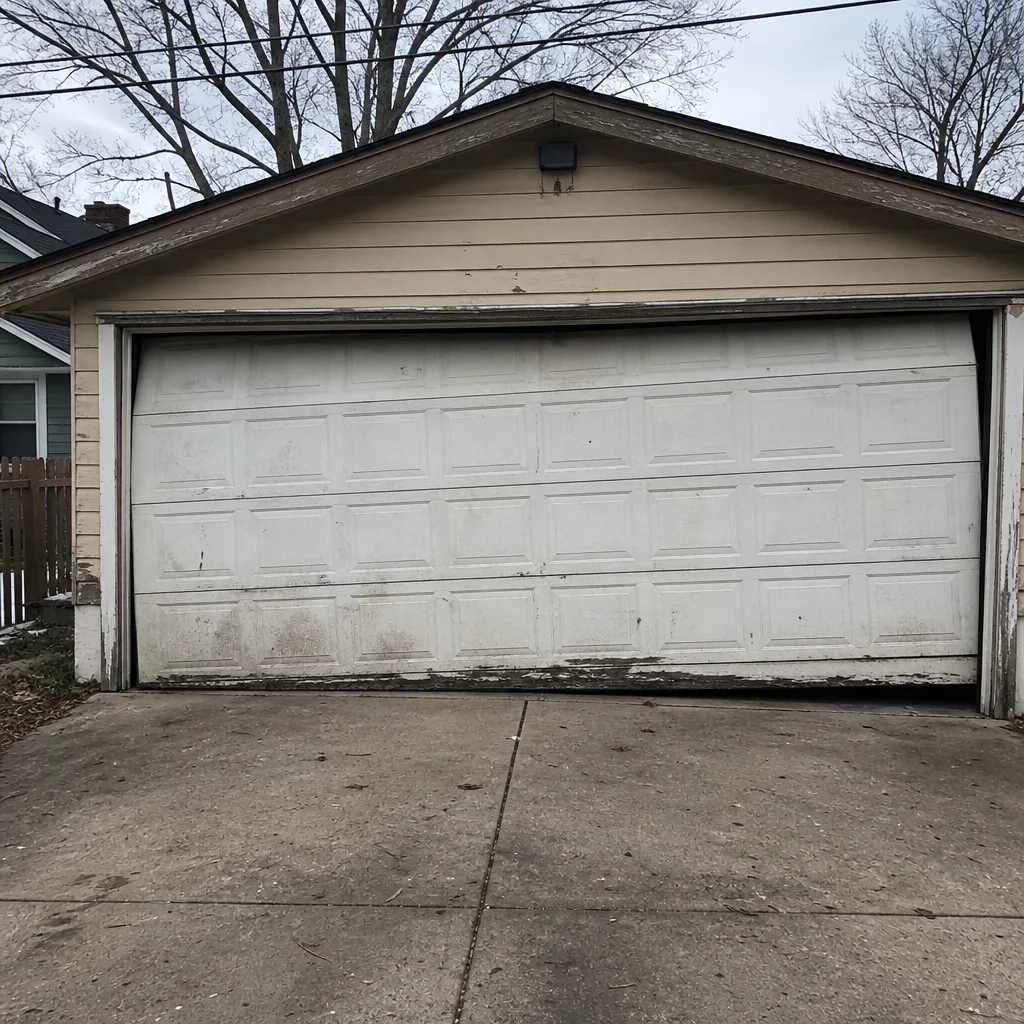 Before
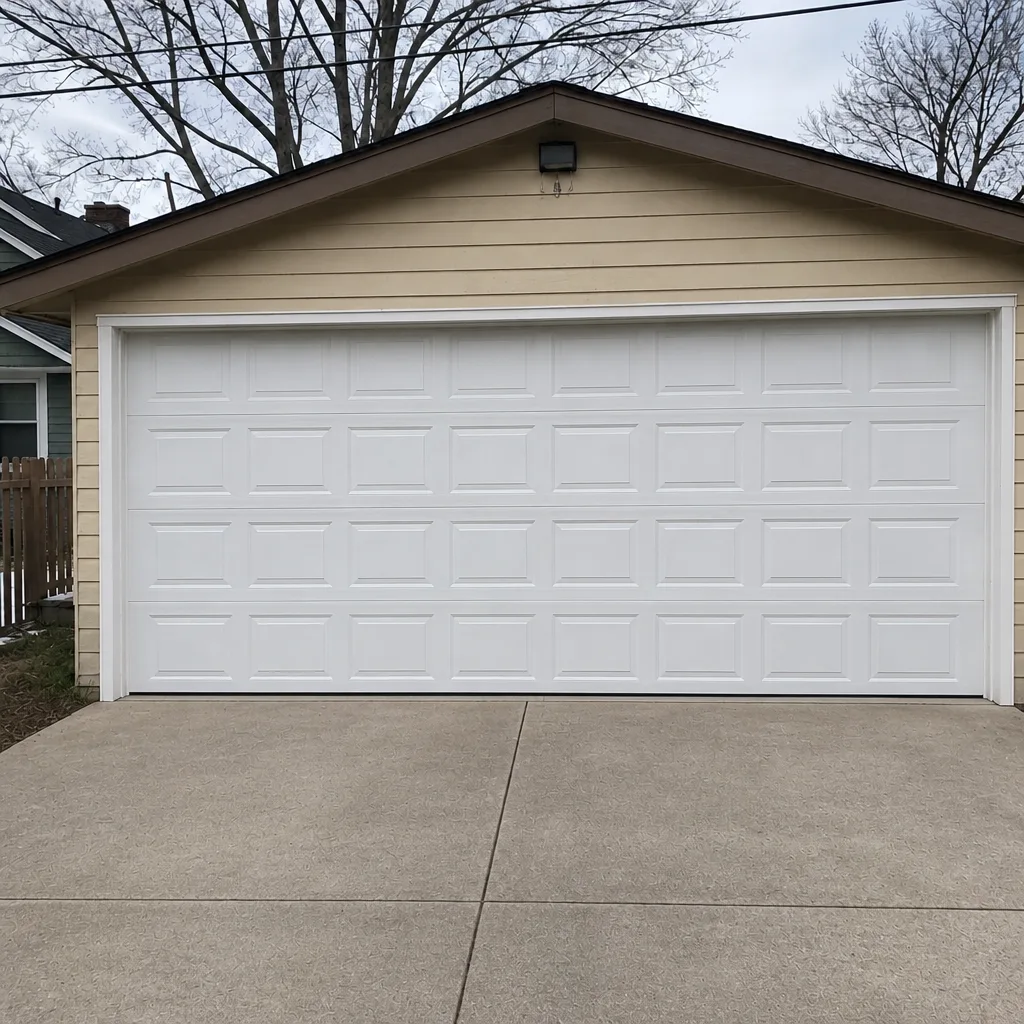 After
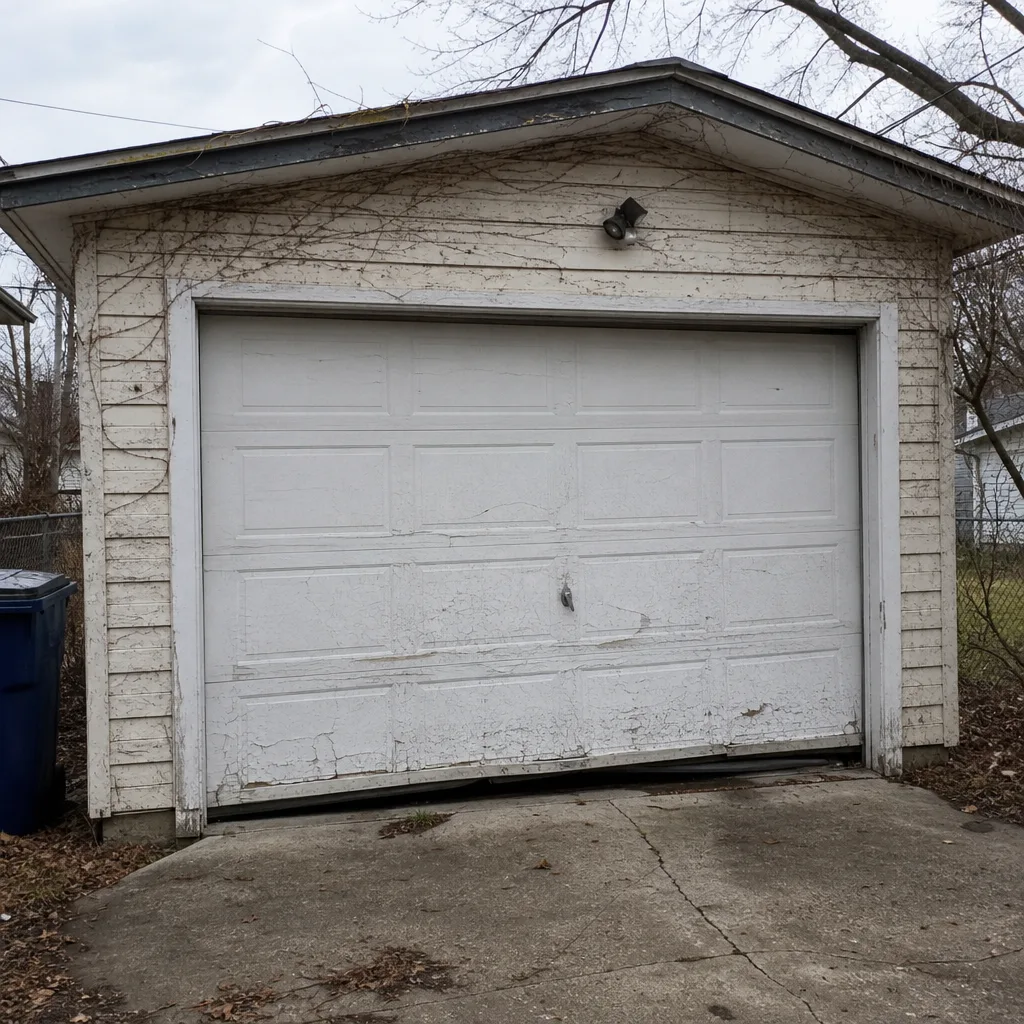 Before
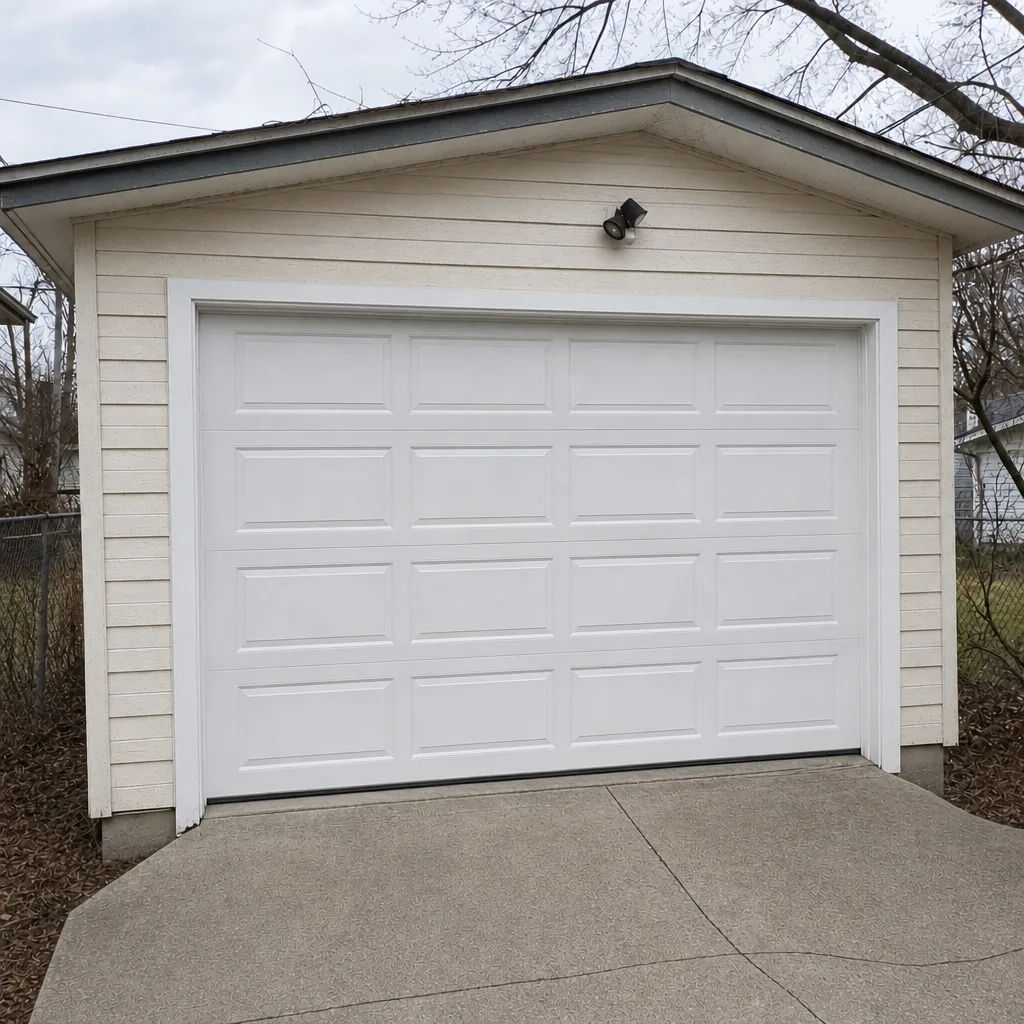 After
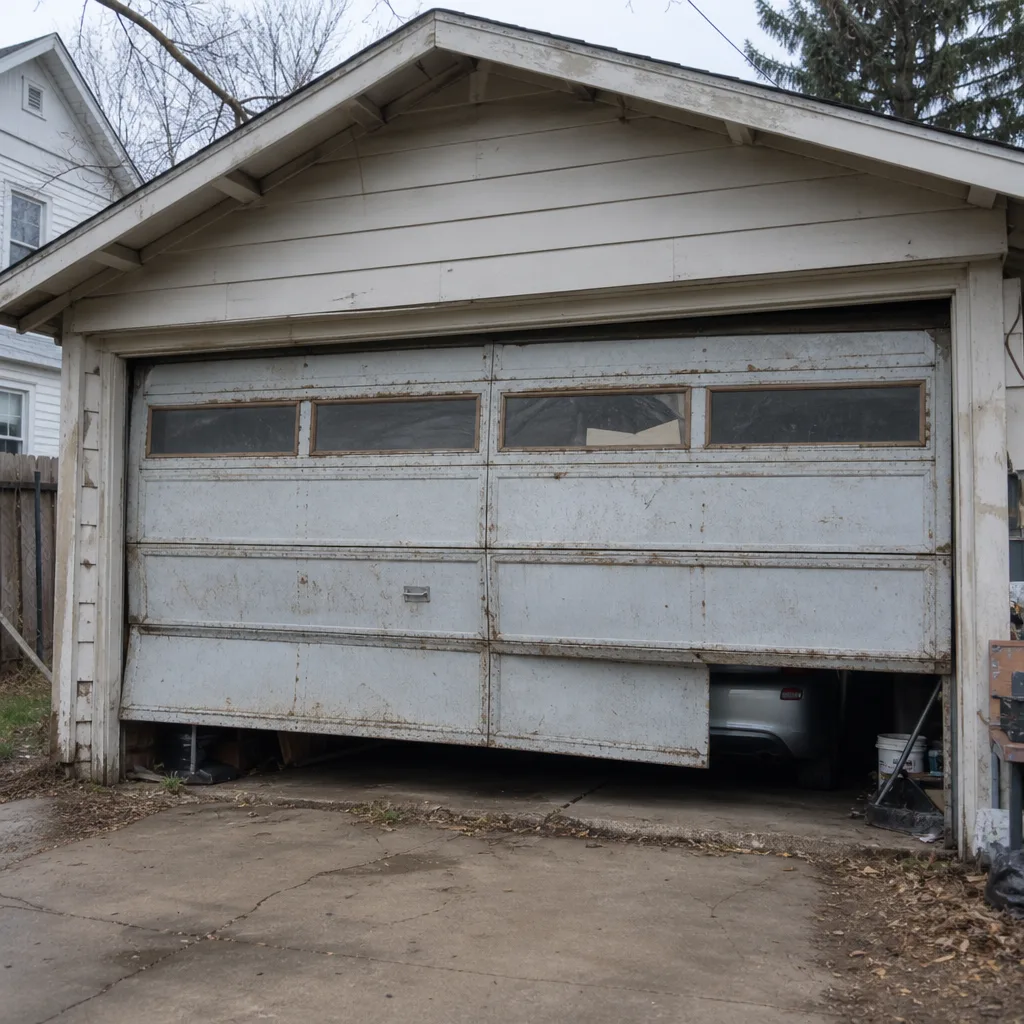 Before
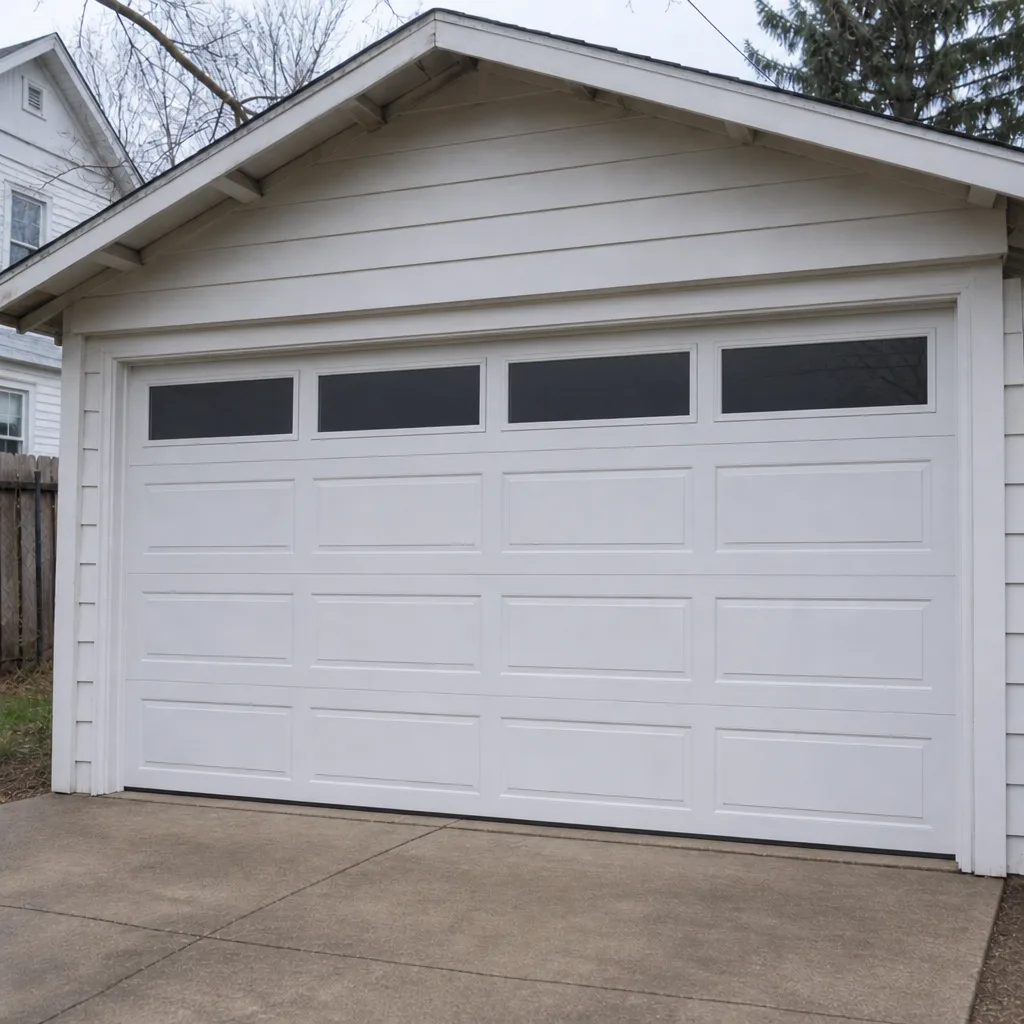 After
When to Call a Professional
Call a professional for any repair that touches springs, cables, tracks or the opener’s internals. Call urgently if the door is crooked, if it drops or slams, if you’ve heard a snap from the torsion tube, or if a cable is visibly frayed or hanging. Leave the door in the closed position if it will stay there, and keep cars and people out from under it until a tech has looked at it.
For everything on the safe-to-try list – sensor wipes, bolt tightening, remote pairing, seal thawing – talk to us first. We’ll walk you through what to check and tell you honestly whether it’s a five-minute fix or something that needs a visit. Garage Door Repair Powderhorn offers free estimates in Powderhorn, upfront pricing, and a satisfaction guarantee. Call (877) 352-5109 for a free estimate, or for urgent issues any time from 7am to 7pm.
Frequently Asked Questions
Pull the emergency release and lift the door by hand. If it lifts easily and stays where you leave it, the door is balanced and the problem is in the opener. If it’s heavy, slams down or won’t budge, the springs or cables are the real cause and the opener was never the issue. That single test is the fastest diagnostic you can do.
Water seeps into track joints, seals and hardware and then freezes and expands, nudging tracks out of alignment and stiffening rollers. The door starts to bind against the track, the opener senses resistance and stops, and it looks like an opener failure. A late-fall hardware and track check catches most of these before the first hard freeze.
No. Torsion springs hold hundreds of pounds of stored tension, and replacing one means winding and unwinding that tension with winding bars. A slip can cause severe injury. Spring repair is one of the jobs we always send a trained technician to, and it’s worth the call.
Keep people and vehicles away from the door and call for emergency service. A door stuck open in winter is a security gap as well as a weather problem. Don’t try to force it down by hand – if the spring or a cable has failed, the door can come down hard and without warning.
In most cases, a repair. Springs, cables, rollers, openers and tracks are all serviceable on a door that’s structurally sound. A new door makes sense when panels are rusted through, the door is functionally outdated, or the repair cost approaches replacement. We give you a written estimate for both so the choice is clear.
We’re trained to work on eight major brands: LiftMaster, Chamberlain, Genie, Clopay, Amarr, Wayne Dalton, Craftsman, and Raynor. That covers most openers and doors we see in Powderhorn, and it means your repair gets the right part the first time instead of a second visit. Call (877) 352-5109 for an exact quote – estimates are free.
The Bottom Line
Troubleshoot the physical door before the opener. A 60-second manual balance test tells you whether the problem is mechanical (springs, cables, tracks) or electrical (opener, sensors, remote) and saves you from paying for a repair you don’t need. Powderhorn’s freeze-thaw cycles accelerate track drift, seal failures and loose hardware, so a fall hardware check prevents most winter calls. Never touch torsion springs, frayed cables or bent tracks under tension – those are jobs for a trained technician. When in doubt, call; when it’s low risk, we’ll walk you through it. Either way, you’ll know what you’re dealing with before anyone picks up a wrench.
Call (877) 352-5109 for a free estimate on any garage door problem in Powderhorn. Our team can talk you through a symptom, send a technician for a same-day visit on urgent repairs, and give you a written price before work starts.
Written by the team at Garage Door Repair Powderhorn.